Quick answer: Cayman-style cooking is Caribbean island food, built on local reef catch and heritage dishes like conch and rundown, cooked with techniques and spice from far beyond the islands. At SeaRock in George Town, Grand Cayman, it means Chef Thushara Siriwardana's particular blend: a Sri Lankan hand for spice and slow pots laid over Caribbean ingredients and soul. The result is food that tastes unmistakably of the Cayman Islands, with a depth you will not find anywhere else on the island.
Is there really a single Caymanian cuisine?
Caymanian cooking grew the way the islands did: from the sea, and from everyone who passed through. The heritage runs deep, with conch served as chowder, fritters, stew and ceviche; rundown, where fish is slow cooked in coconut milk with island spice; fish tea; and dense island desserts like heavy cake and cassava cake. The protein is the reef itself, snapper, grouper, mahi mahi, wahoo and tuna, plus Caribbean spiny lobster and conch in season during the cooler months. Check current local regulations, because both are protected here.
So yes, there is a real Caymanian table. But the islands have always absorbed the cooks who arrived on them, and that is where SeaRock's version begins. If you want the full heritage picture, our piece on Caymanian rundown walks through one of the oldest dishes on the island.
Where the Sri Lankan hand comes in
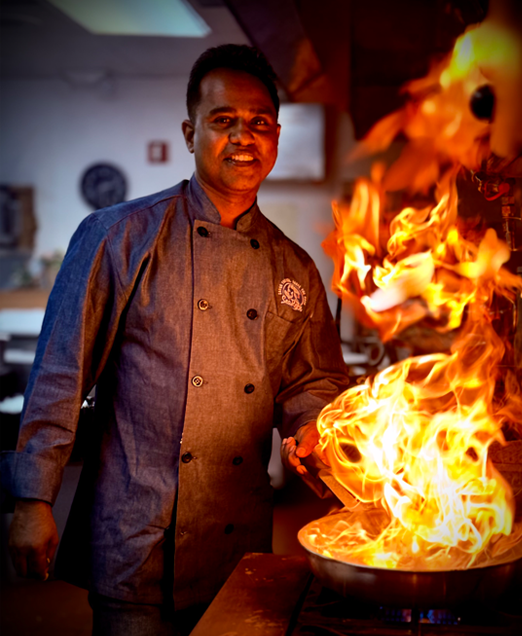
Chef Thushara learned to cook in his grandmother's kitchen in Sri Lanka, stirring the curry pot while it cooked low and slow, learning by smell and feel long before he learned by recipe. That upbringing left him two things that define his food today: a respect for spice as a layered build rather than a single hit, and patience with a pot that cannot be rushed.
From Sri Lanka his career took him through Dubai and California before he arrived in Grand Cayman in April 2005 and stayed. Each kitchen added something: the precision of fine dining, the spice routes of South Asia, the bright produce-driven cooking of the American west coast. Two decades later, all of it points back at the island catch in front of him.
Respect the catch, honour the heritage, and send out nothing you would not serve at your own table.
The technique: slow pots and layered spice
The thing that makes this cooking specific is not a single secret ingredient. It is method. Two habits run through almost everything on the menu.
- Slow building of flavour. Chowders, braises and coconut-simmered dishes are given time so the spice settles into the fish rather than sitting on top of it. This is exactly how Caymanian heritage food was always made, which is why a Sri Lankan slow-pot habit sits so naturally here.
- Layered, not loud, spice. Scotch bonnet, coconut, curry leaf and aromatics are used to add depth, not to set your mouth on fire. The heat is a backbone, not the whole point.
- Light touch on the freshest catch. When the tuna comes in line-bright, the kitchen does almost nothing to it, because the best ingredient needs the least.
That balance, slow where it helps and barely-there where it does not, is the technique people are really tasting when they say SeaRock food is different.
Where it shows up on the plate
This is not theory. You can taste the blend dish by dish. A few that show the hand clearly:
- Conch chowder, the most Caymanian thing on the table, slow-simmered with island spice and a whisper of scotch bonnet. Guests have called it among the best on Grand Cayman.
- Local Snapper, CI$36, with lemongrass rice, salted mango chutney and a saffron Chardonnay sauce. That lemongrass and chutney pairing is the Sri Lankan and Caribbean handshake in one plate.
- Slow-Braised Lamb Leg, CI$34, with parsley potato, roasted seasonal vegetables and a Thai curry sauce, a clear example of the slow-pot, layered-spice method.
- Chicken Curry, CI$16.50, with jasmine rice, mango chutney and fried plantains, the cleanest, most affordable introduction to the kitchen's spice.
- Braised oxtail bruschetta and coconut shrimp with honey reduction, where Caribbean ingredients meet a global technique.
Prices are in Cayman Islands dollars (CI$) and US dollars are accepted. You can read the whole list on the SeaRock menu, and the story of the cook behind it is in Meet Chef Thushara.
Why this matters for what you order
If you understand the style, you order better. Lean into the dishes where the slow pots and layered spice do their work: the conch chowder, the curries, the braises. Then balance them with something the kitchen barely touches, like the fresh tuna or the snapper, so you taste both ends of the method in one meal. That contrast, depth on one plate and clean reef freshness on another, is the whole point of Cayman-style cooking done well.
It is also why a meal here feels like the island rather than a generic Caribbean menu. The heritage is Caymanian, the catch is local, and the hand that ties it together is one of a kind. You can see the room it is served in, including the largest reef mural on the island, on the about page.
Cayman-style cooking is something you have to taste to understand, and there is one table on the George Town harbour where the whole story lands on a plate. Come hungry, order the conch chowder first, and let twenty years of island cooking explain itself. Reserve a table at SeaRock and taste where Sri Lankan roots meet Caribbean soul.