Quick answer: Caymanian cuisine grew from a sea-faring people who lived off the reef, the turtle and the coconut grove. Over time it absorbed African, British and wider Caribbean influences, and today it has evolved into a confident reef-to-table style of cooking. At SeaRock in George Town, Grand Cayman, that heritage meets fine-dining technique on the harbour waterfront.
A cuisine born from the sea
The Cayman Islands have always faced the water. Long before tourism, before the banks and the cruise ships, these were islands of sailors, fishermen and turtle hunters. The food followed the life. With little farmland and a great deal of ocean, Caymanians built their cooking around what the reef and the shoreline provided: fresh fish, conch, lobster in its season, and the turtle that once defined the islands so completely that ships came from across the region to trade for it.
That sea-faring past is the foundation of everything that followed. A people who spent their lives on schooners learned to preserve, to salt, to slow cook, and to make a small catch stretch across a family. The dishes that came out of those kitchens were honest and resourceful, and many of them are still cooked today.
The heritage dishes
- Turtle stew, the traditional centrepiece of old Caymanian cooking, slow simmered and deeply tied to the islands' sea-faring identity.
- Conch in every form: chowder, fritters, stew and fresh ceviche, the most enduring shellfish in the local diet.
- Rundown, fish slow cooked in coconut milk and island spice until the gravy turns thick and golden.
- Fish tea, a restorative broth, and fresh reef fish such as snapper, grouper, mahi mahi and wahoo.
- Heavy cake and cassava cake, the dense, sweet bakes that have always closed an island meal.
To go deeper on two of the most iconic, read about conch and turtle in Cayman heritage, and for the coconut-braised classic, our piece on Caymanian rundown explains how that pot comes together.
The influences that shaped the plate
No island cuisine grows in isolation, and Caymanian food is a blend. African cooking traditions brought slow stews, the use of root vegetables and a confidence with spice. British settlers and the long colonial connection left their mark in the baking, in puddings and in the names of dishes. The wider Caribbean shared its coconut, its scotch bonnet, its rice and peas and its rhythm of one-pot cooking. Trade routes carried in flavours from far beyond the region too.
What ties these threads together is the reef. Whatever arrived from elsewhere, the centre of the Caymanian plate stayed local: fish landed that morning, conch from local waters, coconut from the grove. The capital, George Town, grew as the islands' port and gathering point, and its waterfront has always been where the catch met the cook.
You can read a whole island in its food. Cayman's tells a story of the sea, of resourcefulness, and of generations who made a great deal from a little.
From subsistence to reef-to-table
For most of the islands' history this was home cooking, made from necessity and shared at family tables. As Grand Cayman grew into a destination, that food began to step into the dining room. A new generation of cooks recognised that the heritage dishes were not humble at all. Conch, reef fish and slow coconut braises are, by any honest measure, a luxury. The work became to honour the tradition while raising the technique, sourcing the freshest local catch and plating it with the care of a serious kitchen.
This is what people mean by reef-to-table on Grand Cayman: cooking that begins with the morning's catch and ends on a plate worthy of it. Some traditions, like turtle, are now carefully protected and regulated, and species such as Caribbean spiny lobster and conch are seasonal under local rules, so the modern table follows the calendar and the law as much as the recipe. For a fuller sense of how locals still eat today, see what Cayman cooking really is.
Food at the heart of island life
Caymanian cuisine was never only about feeding people. It marked the calendar and held families together. Sunday cooking, big pots shared after church, catches brought home and divided among neighbours: the food carried the social life of small islands where everyone knew everyone. Heritage dishes still appear at weddings, holidays and homecomings, and a Sunday table remains one of the warmest expressions of the culture.
That is why eating the food is one of the best ways to understand the place. You taste the sea-faring past, the make-do resourcefulness, and the generosity that turned a single catch into a meal for many. It is living history, cooked fresh, and it is still evolving with every new cook who picks up the pot.
SeaRock's modern take
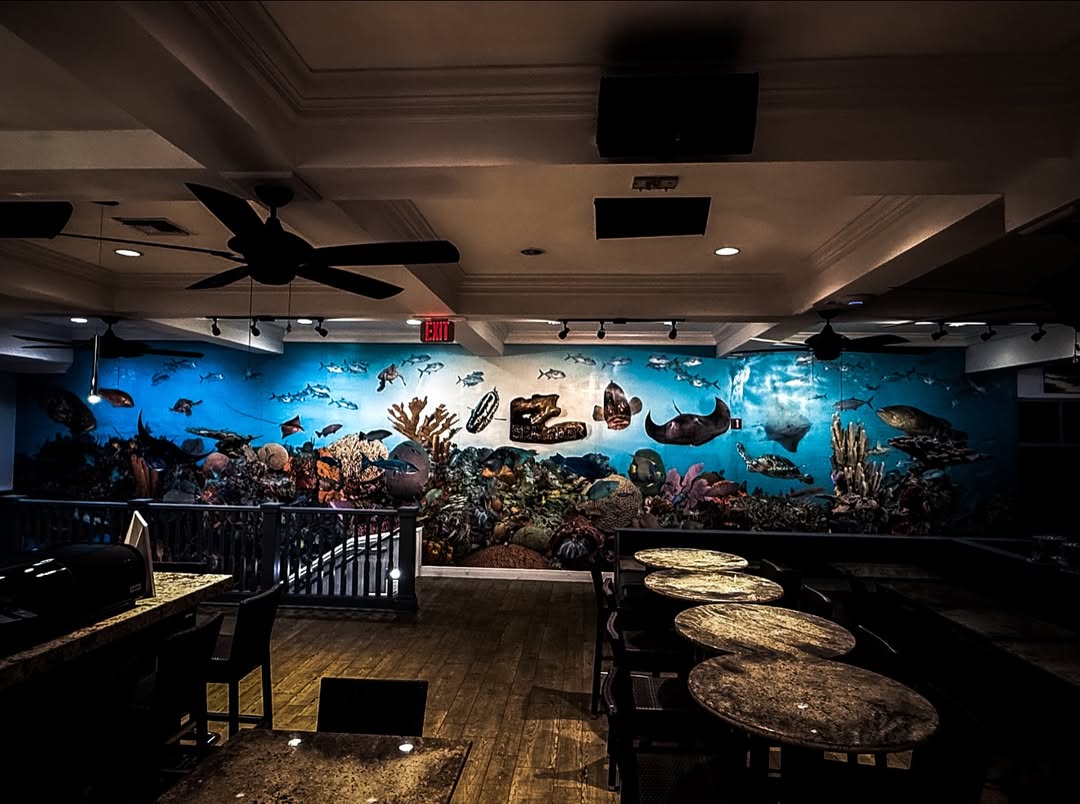
SeaRock sits inside that story rather than beside it. The dining room is wrapped in the largest Reef Mural on the island, one continuous painting of Cayman's underwater world, from coral garden to turtle to stingray. It is a fitting backdrop for a kitchen whose whole purpose is to bring the reef to the table.
In that kitchen, Chef Thushara Siriwardana brings two decades of Grand Cayman cooking and a Sri Lankan and Caribbean hand to the island's heritage. The conch chowder is slow simmered the old way. The local snapper arrives with lemongrass rice and a saffron Chardonnay sauce. The curry grouper and the coconut-rich plates carry the same DNA as the heritage pot, finished with fine-dining precision. You can explore the full range on our menus page, and meet the cook behind it in our profile of Chef Thushara.
History is best understood with a fork in hand. To taste how far Caymanian cuisine has travelled, from the schooner galley to the candlelit harbour table, reserve a table at SeaRock in George Town and let the kitchen tell you the rest.